BUILD & GROW YOUR BUSINESS ON AI 3 BOOKS · 33 CHAPTERS · 286 TECHNIQUES SOFT COPY ₹349 · 77% OFF 3 PRINTED BOOKS ₹1,249 · SAVE ₹3,750 BUILD & GROW YOUR BUSINESS ON AI 3 BOOKS · 33 CHAPTERS · 286 TECHNIQUES SOFT COPY ₹349 · 77% OFF 3 PRINTED BOOKS ₹1,249 · SAVE ₹3,750

LEARNVESTOR · THE COMPLETE 3-BOOK SYSTEM · 2026 EDITION

Build & grow your business on AI.

Three books that take you from picking a model, to building systems that connect to your real tools, to automations that run overnight and produce work a client pays for.

3 Books
33 Chapters
286 Techniques
33 Run It projects

Instant access · Free delivery in India · Lifetime access

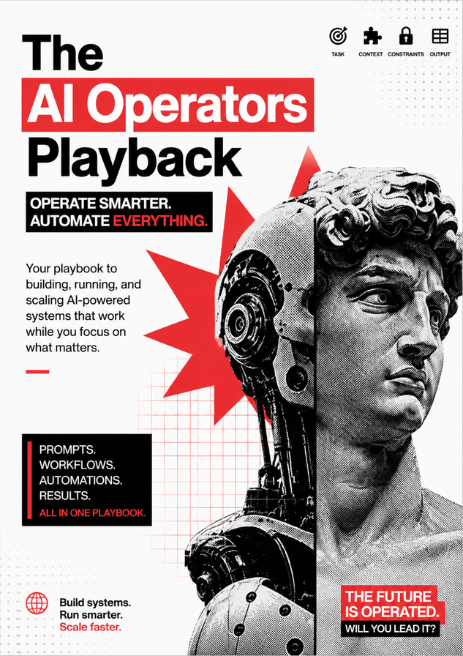
The AI Operator's Playbook — Volume 1
Vol 1 · Think
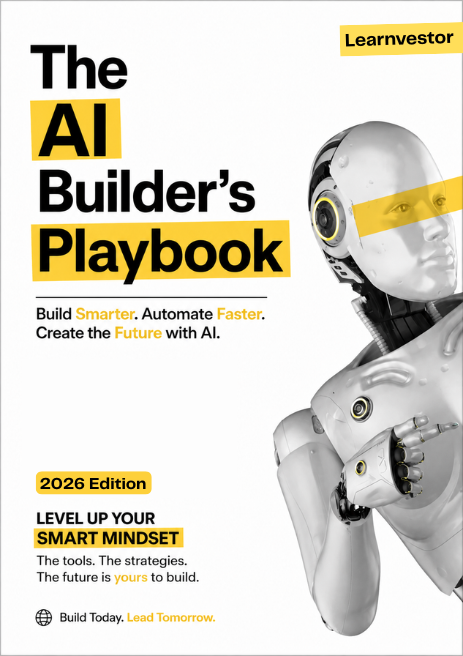
The AI Builder's Playbook — Volume 2
Vol 2 · Build
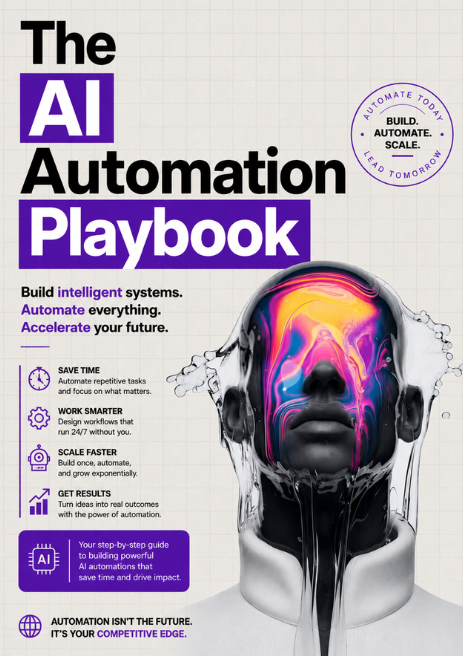
The AI Automation Playbook — Volume 3
Vol 3 · Ship

How the three volumes connect

One system, three layers. Each one feeds the next.

Volume 1 is the thinking layer — no code required. Volume 2 is the building layer. Volume 3 is the shipping layer, where it runs without you.

Why most AI effort produces nothing

You've used AI for a year. Your business hasn't changed.

You paste into a chat box, copy the answer out, and do it again tomorrow.
Every prompt is written from scratch. Nothing is saved, versioned or reused.
It works in the demo and falls apart the moment a real customer file arrives.
You can't tell whether output is good — you're testing on vibes.
You built an automation, it broke silently, and you found out from a client.
Your token bill grows and nobody can say which workflow spends it.

The gap isn't knowing which tool to use. It's that nobody taught you the layer underneath — how to structure, ground, test, connect and monitor. That's what these three books are.

What's inside

Three volumes. Read in order.

Every chapter is short numbered sections — one technique each — and ends with a Run It project you complete on your own system before moving on.

The AI Operator's Playbook cover
11 chapters 87 techniques No code required

VOLUME 1 · THE THINKING LAYER

The AI Operator's Playbook

Models, Prompts & Grounding

From picking a model to shipping a grounded, tested workflow — without writing a line of code.

  1. 01Model Selection Matrix — reasoning vs instruct vs fast, cost-per-outcome, multi-model routing
  2. 02Context Windows & Token Economics — context rot, position bias, prompt caching, the Devanagari blowup
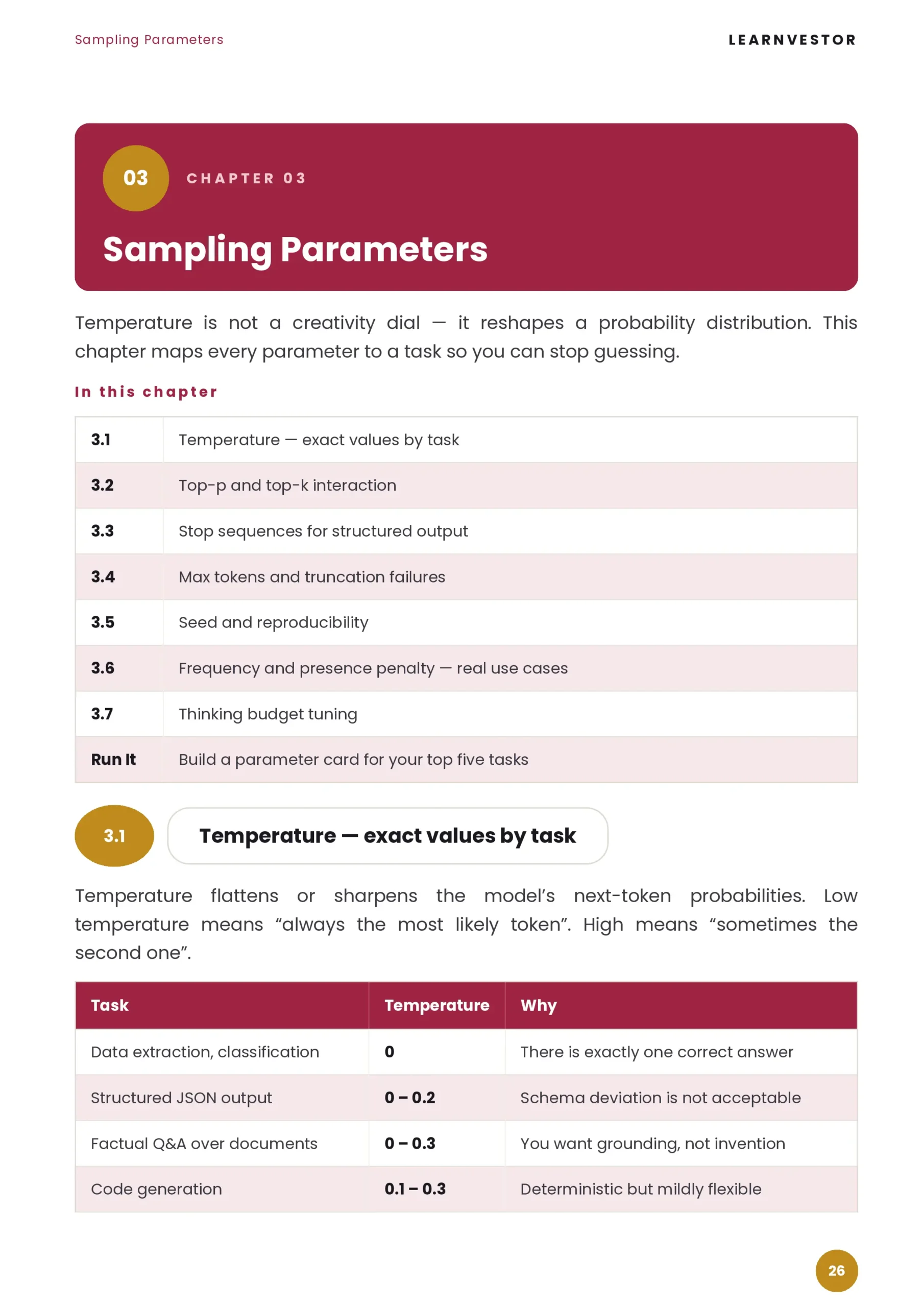
  3. 03Sampling Parameters — exact temperature values by task
  4. 04Prompt Architecture — rebuild one production prompt properly
  5. 05Reasoning Control — decomposing genuinely hard tasks
  6. 06Structured Output Engineering — extraction schemas that survive production
  7. 07Prompt Templating Systems — a real prompt registry, versioned
  8. 08Prompt Injection & Model Security — attack patterns, and a red-team pass on your own workflow
  9. 09Retrieval-Augmented Generation — measure and upgrade a RAG pipeline
  10. 10Long-Context vs RAG — compare three approaches on your corpus
  11. 11Memory Systems + Reference Vault
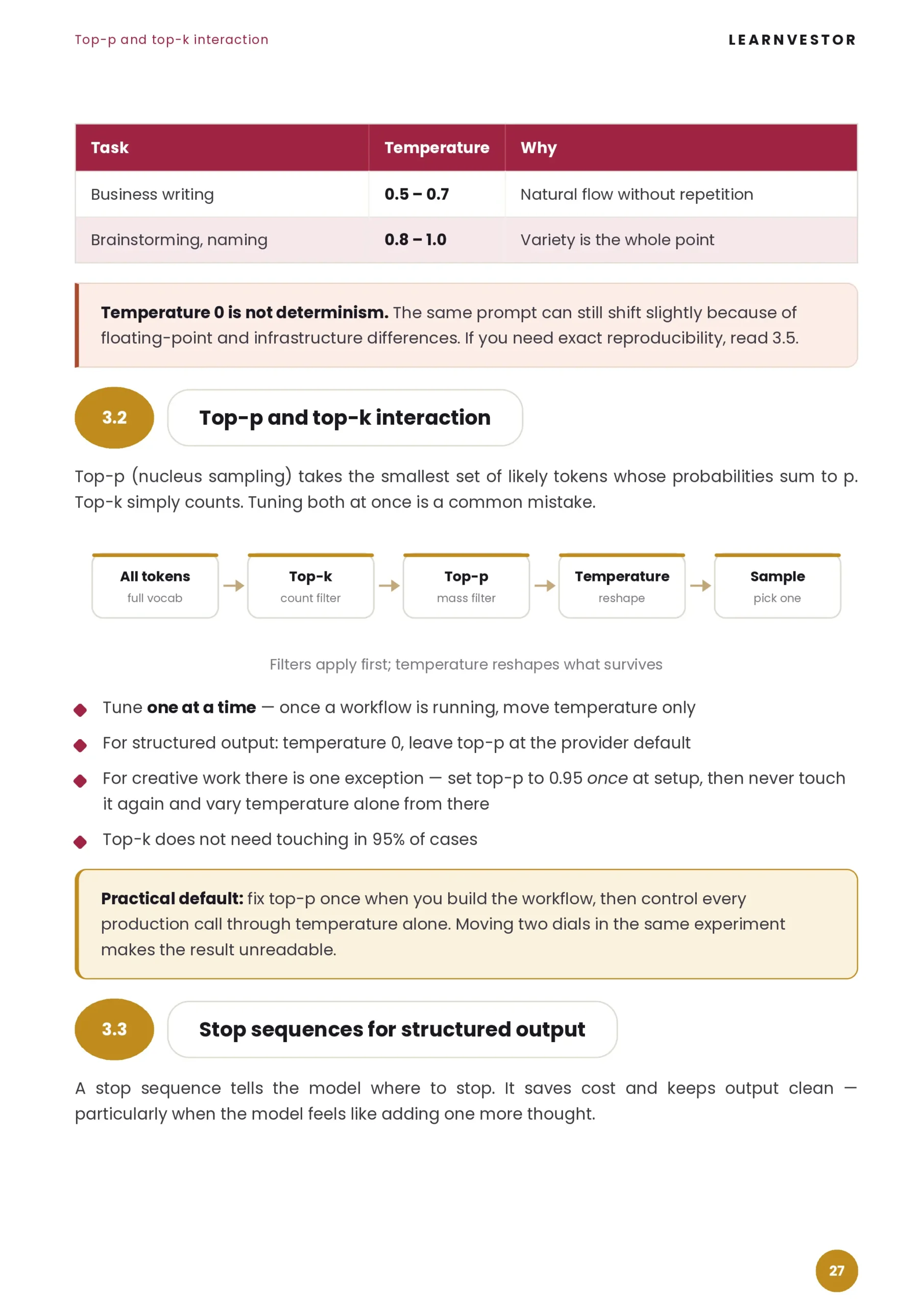
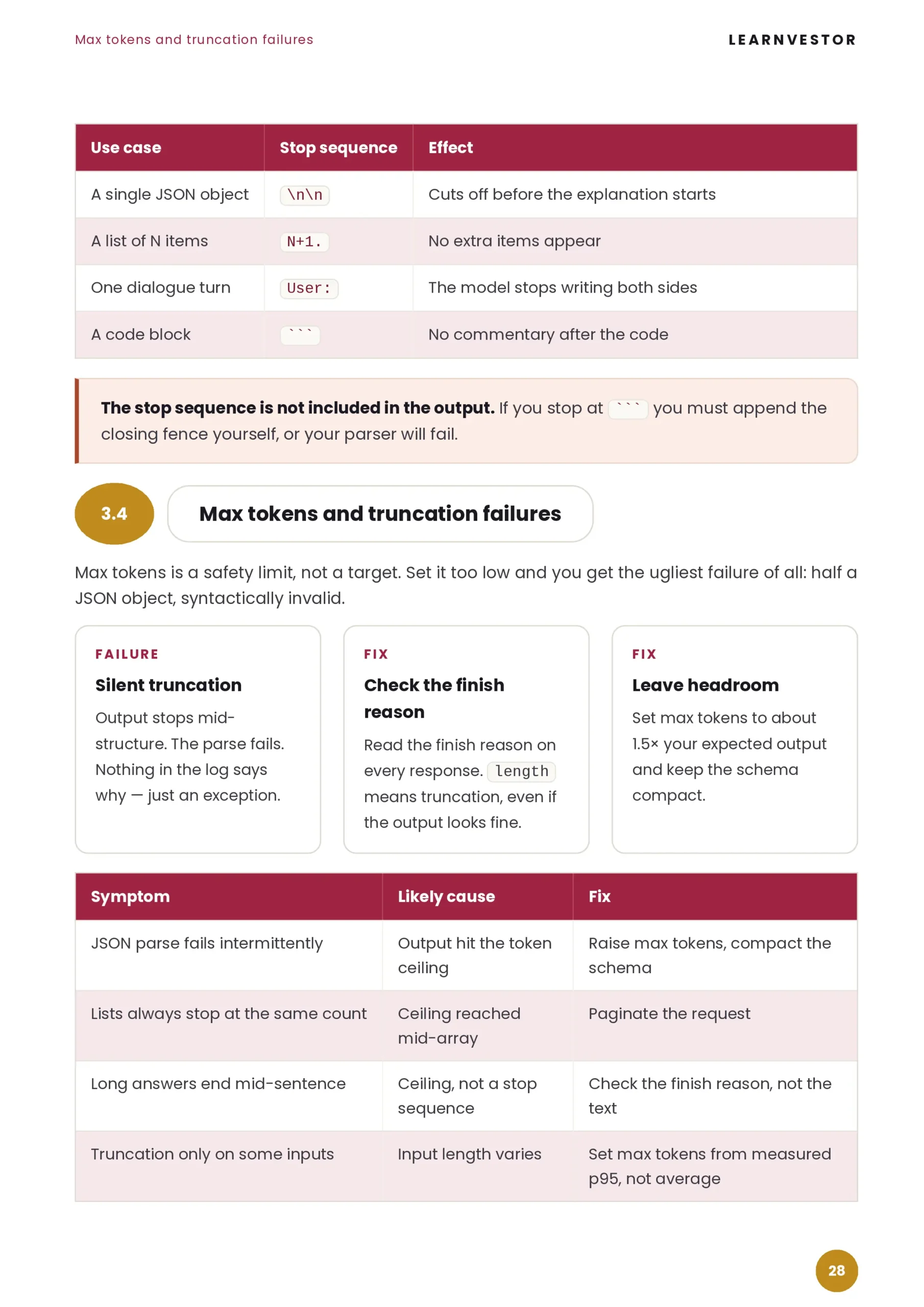
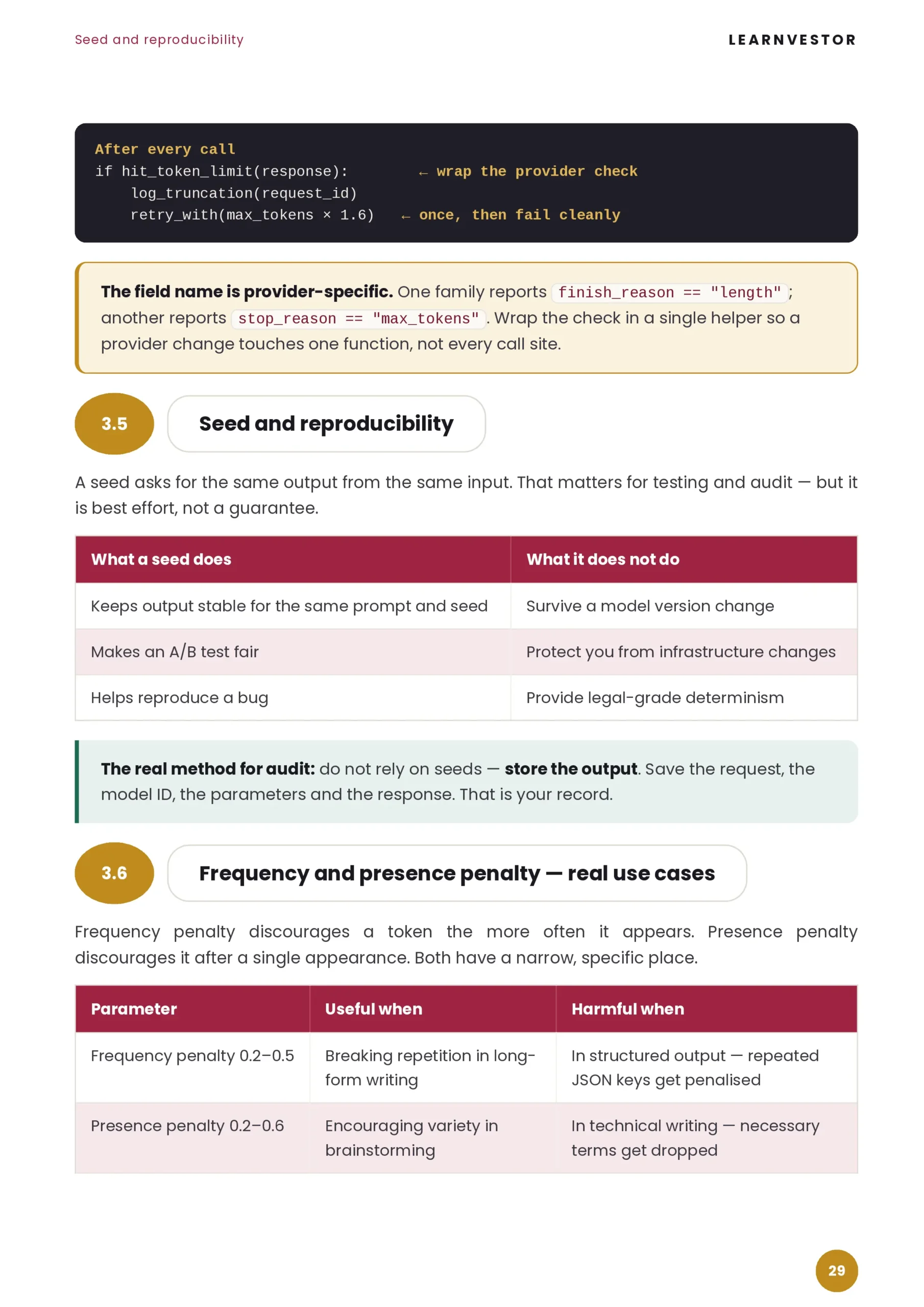
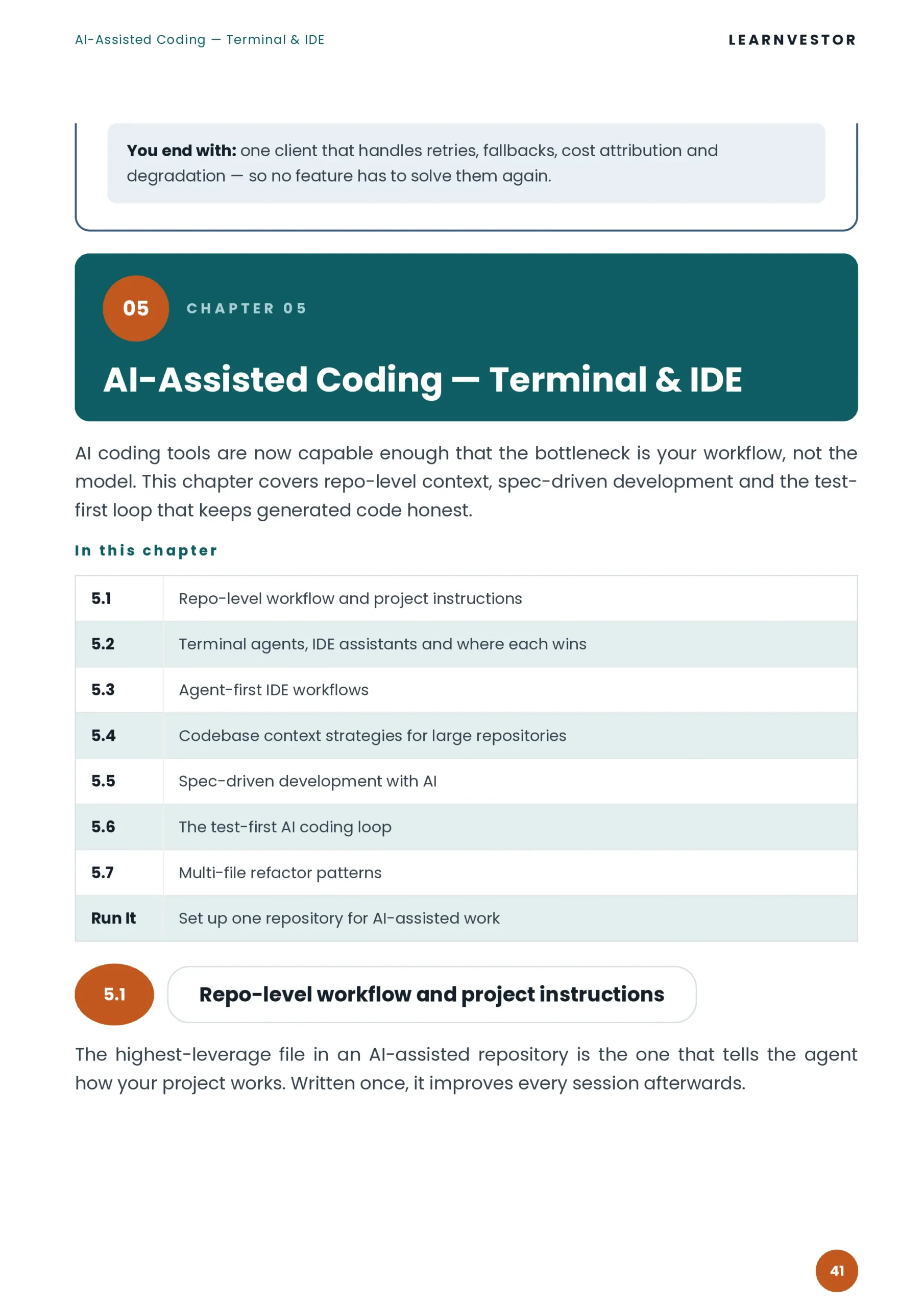
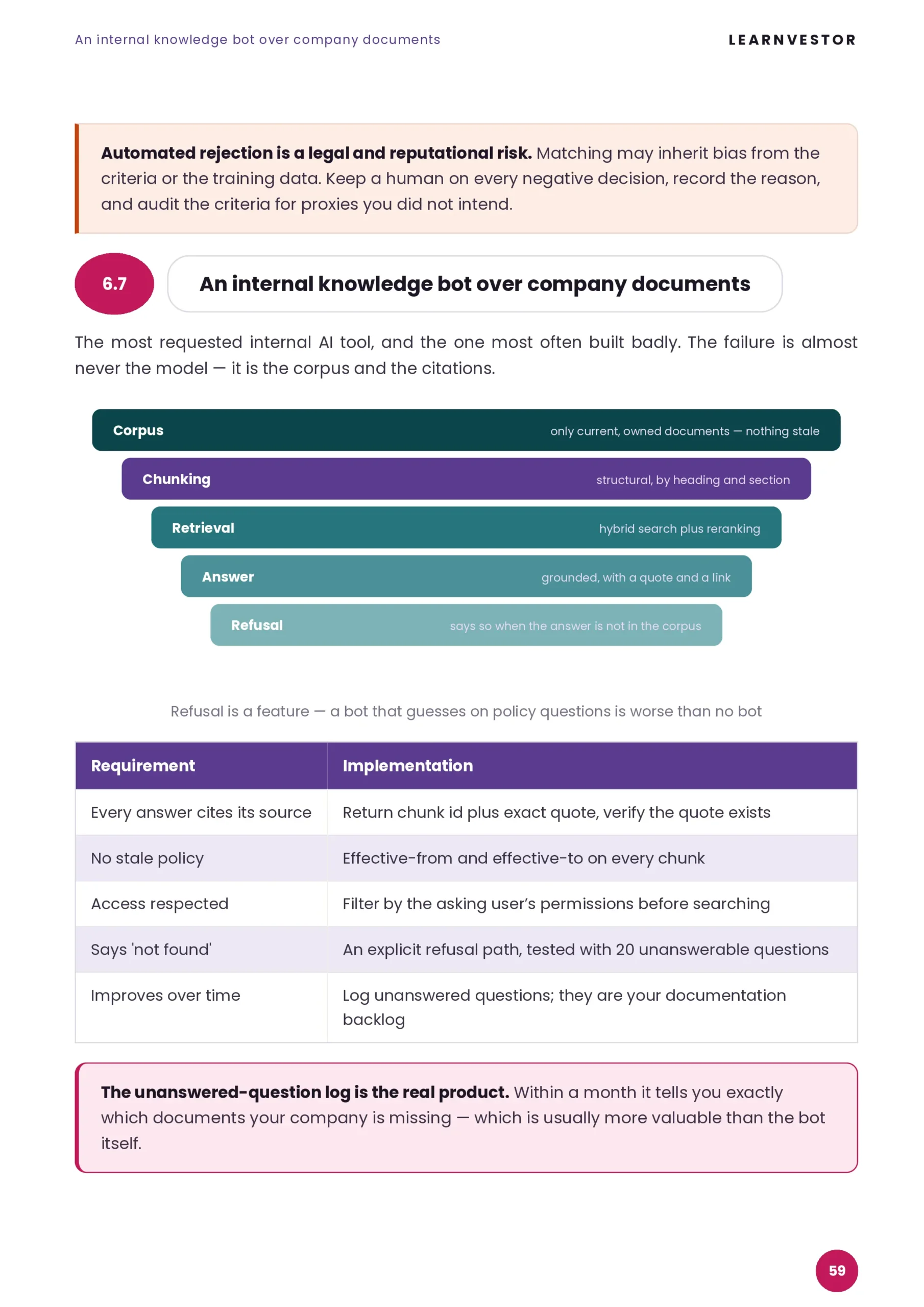
Sample page from Volume 1 Sample page from Volume 1 Sample page from Volume 1 Sample page from Volume 1

Actual pages from Volume 1

The AI Builder's Playbook cover
11 chapters 86 techniques Intermediate → advanced

VOLUME 2 · THE BUILDING LAYER

The AI Builder's Playbook

Tools, MCP, Code & Evaluation

From a tool schema to a measured, governed system running in production.

  1. 01Tool Use & Function Calling — schema design, parallel calls, the too-many-tools problem
  2. 02MCP — build and ship an MCP server for one internal system
  3. 03Skills & Reusable Capability Packages — descriptions that actually trigger
  4. 04Building With APIs — the tool loop, gateways, fallback chains, per-user metering
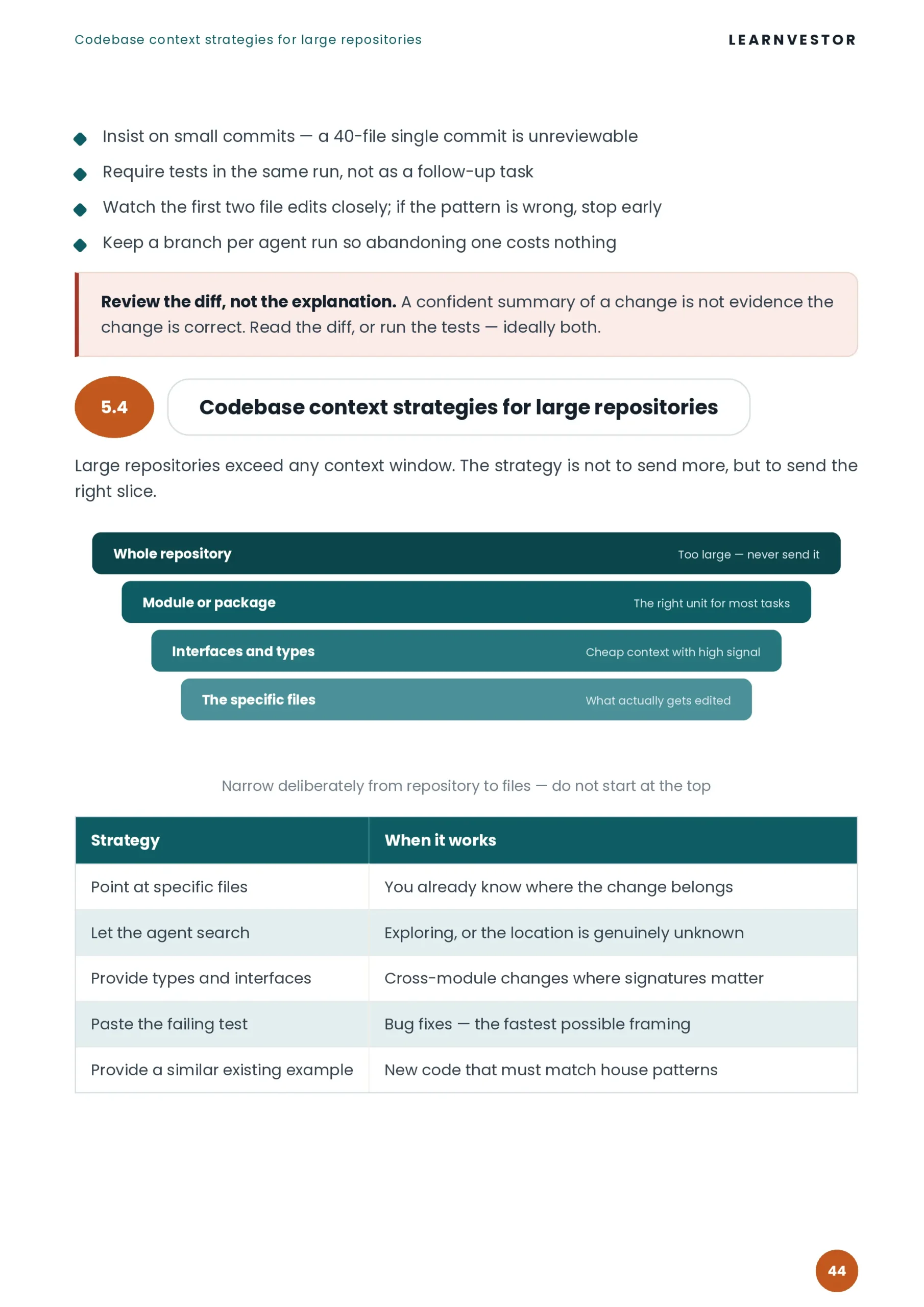
  5. 05AI-Assisted Coding — terminal agents, IDE assistants, spec-driven development
  6. 06Prompt-to-App Platforms — where they break, and the escape hatch
  7. 07Debugging, Review & Migration — AI code review, legacy refactors, framework migration
  8. 08Data Work With LLMs — extraction pipelines, OCR, SQL generation, dedup at scale
  9. 09Evaluation Systems — golden datasets, LLM-as-judge, regression testing in CI
  10. 10Fine-Tuning & Adaptation — the honest decision tree: prompt, RAG or fine-tune
  11. 11Reliability, Governance + Reference Vault
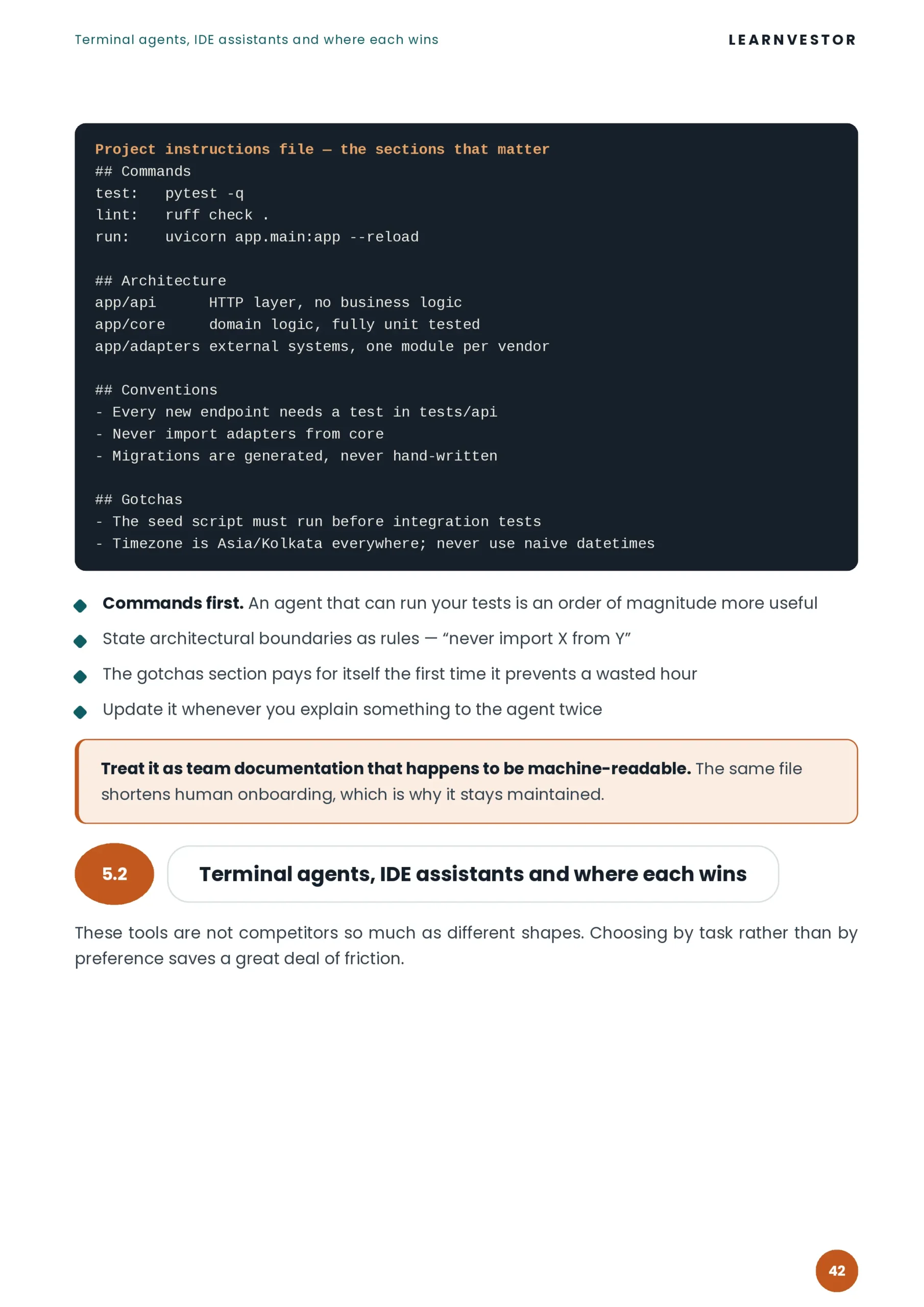
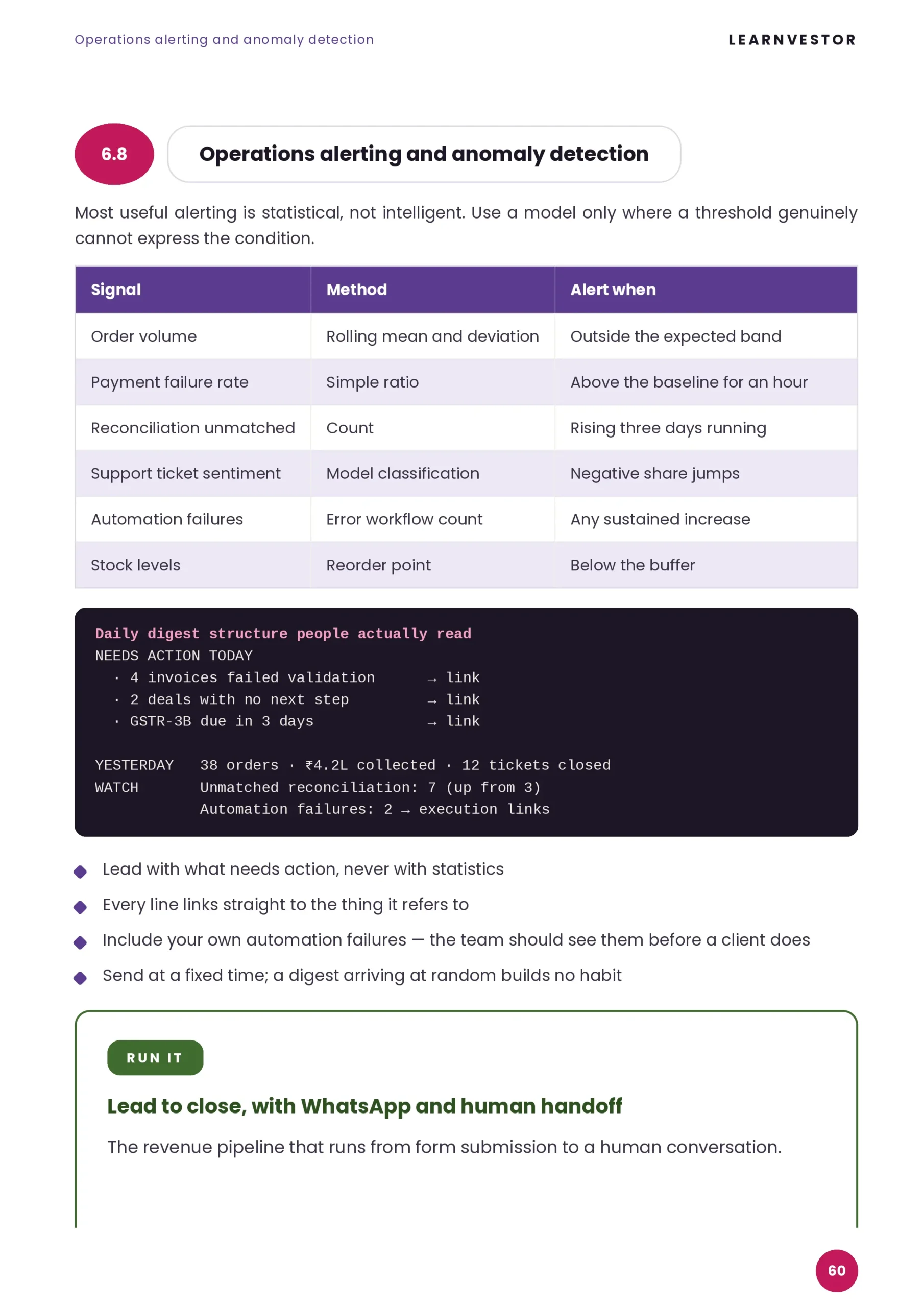
Sample page from Volume 2 Sample page from Volume 2 Sample page from Volume 2 Sample page from Volume 2

Actual pages from Volume 2

The AI Automation Playbook cover
11 chapters 113 techniques The shipping layer

VOLUME 3 · THE SHIPPING LAYER

The AI Automation Playbook

Workflows, Agents & Generative Studio

From a self-hosted instance to an automated studio producing work that earns.

  1. 01Automation Stack Setup — self-hosted n8n on a VPS, error workflows, idempotency, row-claiming
  2. 02Connecting the Real World — OAuth2, webhooks, WhatsApp Business API, payments, ads data, order pipelines
  3. 03LLMs Inside Workflows — model routing for cost, validation gates, human approval gates
  4. 04Document & Report Generation — form to enriched PDF to inbox, hands-off, Devanagari fonts included
  5. 05Marketing & Content Engines — one asset into twelve derivatives, brand-voice enforcement, competitor ad monitoring
  6. 06Sales, Support & Ops — lead scoring, outreach at scale, invoice extraction, internal knowledge bot
  7. 07Agent Architecture — the agent loop, step budgets, cost ceilings, runaway prevention
  8. 08Multi-Agent Systems — orchestrator and worker, browser agents, blast-radius control
  9. 09Image Generation, Production Grade — character consistency, product mockups without a studio, Hindi text in creatives
  10. 10Video, Voice & Audio — UGC-style ad pipeline, Indic TTS, dubbing, cost per finished second
  11. 11Scale, Reliability & Governance — cost dashboards, DPDP Act, AI disclosure, white-label delivery
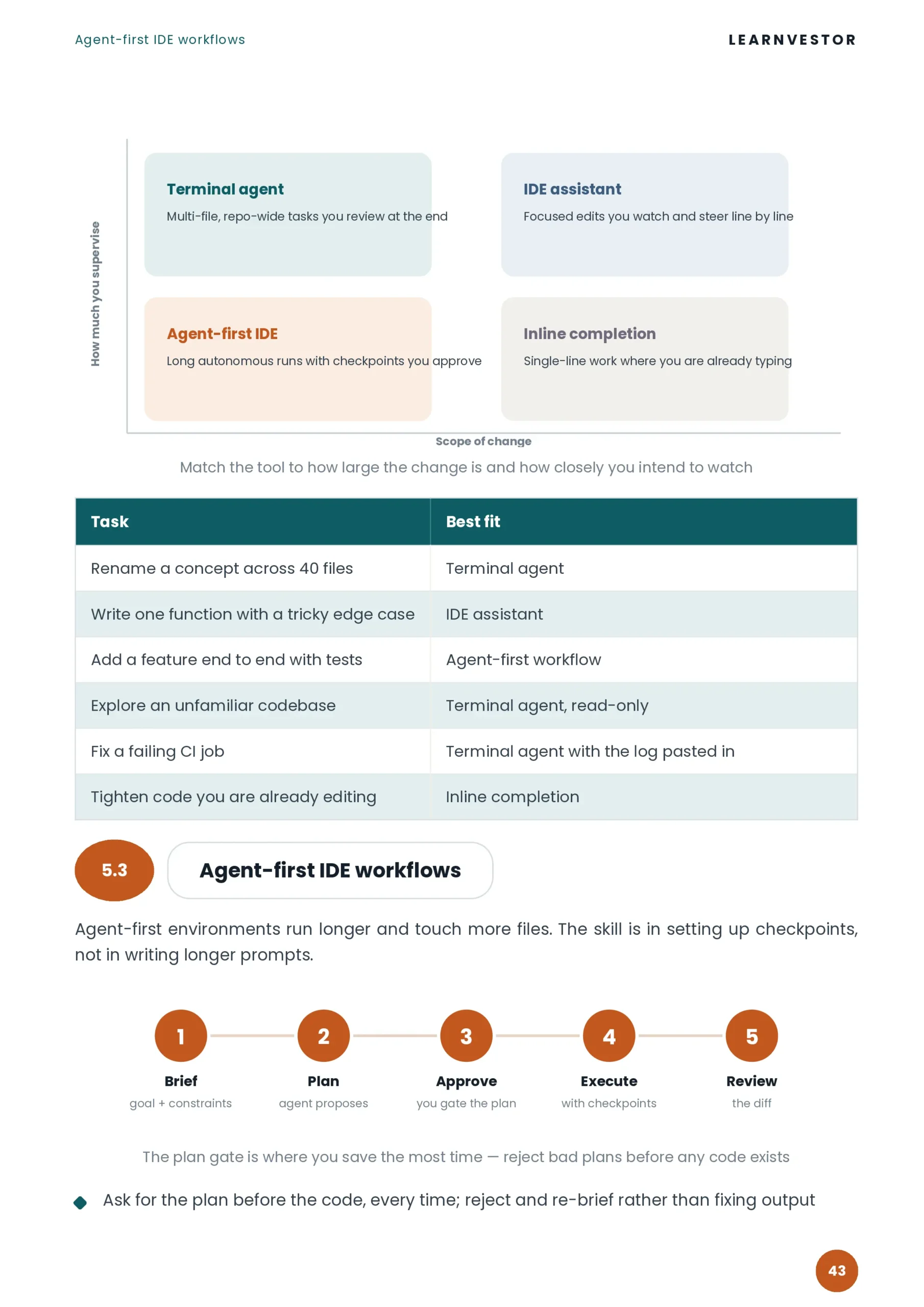
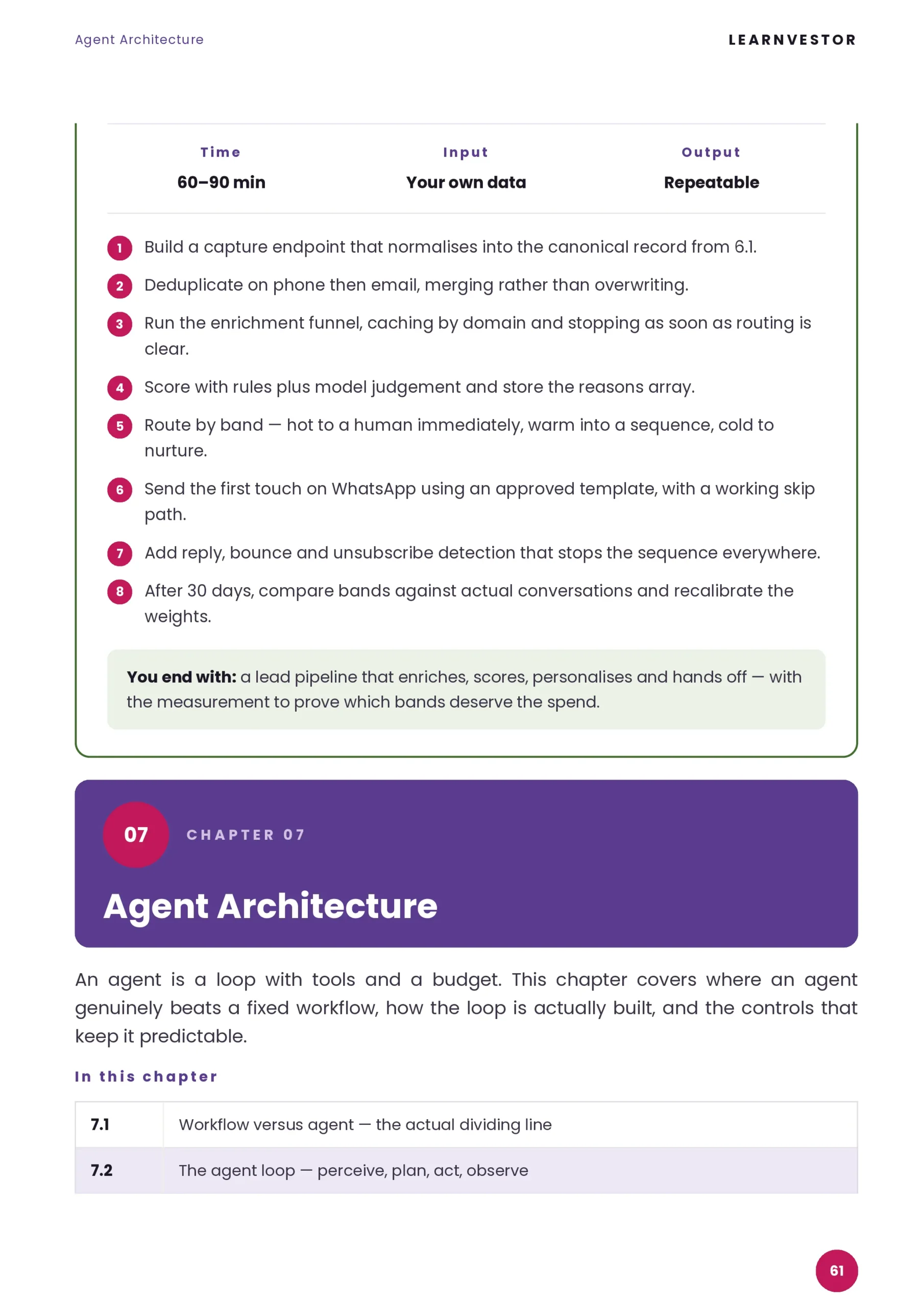
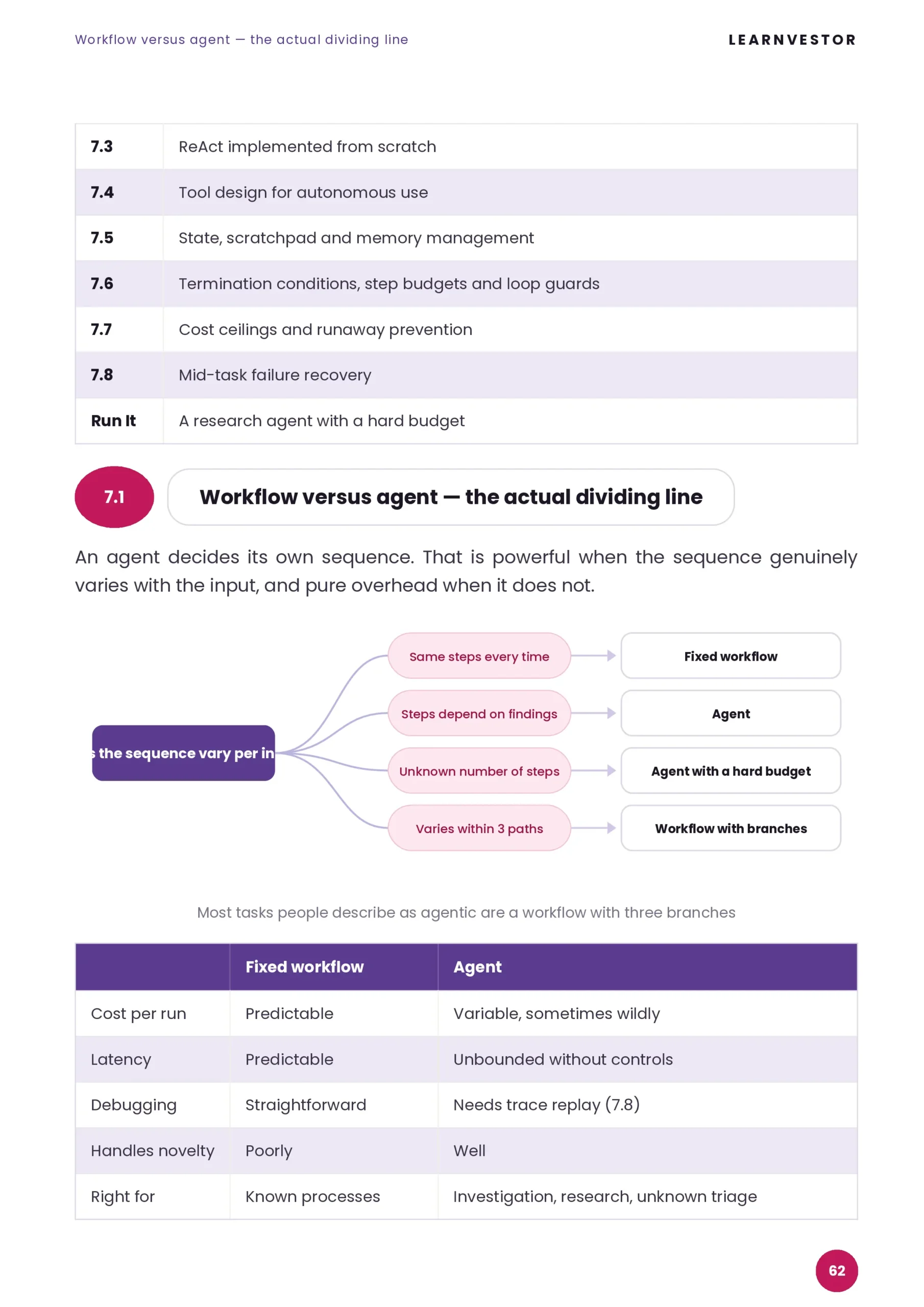
Sample page from Volume 3 Sample page from Volume 3 Sample page from Volume 3 Sample page from Volume 3

Actual pages from Volume 3

What you'll be able to build

Not theory. Thirty-three finished projects.

RUN IT

A payment → WhatsApp → CRM → invoice pipeline

Order comes in, customer gets a WhatsApp message, CRM updates, invoice generates. Nobody touches it.

RUN IT

One brief into a live 30-day content calendar

A single brief expands into a month of platform-ready content that holds your brand voice.

RUN IT

Fifty brand-consistent creatives with Hindi text

Batch-generated ad creatives with consistent characters, products and working Devanagari.

RUN IT

A script into a finished ad in three languages

Video, voice, subtitles and dubbing — the full UGC-style pipeline, with real cost-per-second maths.

RUN IT

A research agent with a hard budget

An autonomous agent that stops when it hits your step limit and your cost ceiling. Both enforced.

RUN IT

An evaluation harness for one feature

Golden dataset, rubric, regression tests in CI. The end of shipping AI on vibes.

Thirty-three of these across the three volumes — one at the end of every chapter.

How it's written

Built to stay correct after the tools change.

Capability classes, not brand names Engines described by what they do, with the criteria to judge any candidate — so the book still works after this generation of tools is replaced.
Every diagram drawn from scratch No screenshots, no reproductions of anyone's interface. Original drawings that stay sharp in print.
Indian operating context Devanagari tokenisation, Indic TTS, WhatsApp Business API, DPDP Act, rupee cost maths.
Warning boxes you shouldn't skip The specific mistakes that cost money, data or a client's trust — marked so you can find them fast.

This is for you if

  • You run an agency and want delivery and creative production to scale without headcount
  • You're a founder replacing manual back-office work with pipelines that run overnight
  • You're a marketer building content and ad engines that hold brand voice
  • Your automations already run — and clients now depend on them
  • You're comfortable with an API, a webhook and a spreadsheet

This is not for you if

  • You want a list of the best AI tools this month
  • You want prompts to copy without understanding why they work
  • You won't open a code node and write thirty lines of JavaScript for Volume 3
  • You're looking for trading or stock market content

From readers

What people say after working through it.

★★★★★
What I liked most is that it goes beyond just teaching AI tools. It explains how to actually build systems around AI and use them in real business workflows. The practical approach made it much easier to follow.
Arushi
★★★★★
I'd used AI for content and basic tasks before, but this changed how I think about AI in a business. The workflow and automation sections were the most useful. Far more practical than a typical AI guide.
Ashutosh Sehwag
★★★★★
The structure of the three books makes a lot of sense — first you understand how to work with AI, then how to build with it, then how to automate and scale. The step-by-step order helped.
Rupal Maloo
★★★★★
The automation part was the most valuable for me. The examples on connecting tools, webhooks, payments and CRM made it much clearer where AI can actually save time and cut repetitive work.
Sukwinder Singh Bassi
★★★★★
This isn't just another collection of AI prompts. It teaches you how to think about AI systems, test them, connect them to real tools and make them reliable. Useful if you're serious about using AI professionally.
Yashwant Reddy
★★★★★
I liked the focus on actual implementation. The parts on AI agents, automation workflows and content systems gave me several ideas I could apply to my own work instead of just experimenting.
Priya Sharma
★★★★★
The biggest difference is the business focus. Instead of explaining AI only from a technical side, the books show how it becomes part of actual operations, marketing, sales and delivery.
Shivkumar Mehta
★★★★★
Detailed without being unnecessarily complicated. The sections on prompts, structured outputs, evaluation and automation helped the most, because they explain not just what to do but why it works.
Arushi Verma
★★★★★
If you already use AI but still do most of the work by hand, this is worth going through. It helped me see how individual AI tasks connect into complete workflows that need much less manual involvement.
Kiran Patel
★★★★★
I bought this expecting another AI tools guide. The focus on systems and implementation is what stood out. The three-layer approach — thinking, building, shipping — makes the whole subject much easier to follow.
Amita Sharma

Choosing between the two

Soft copy or hard copy?

Same three volumes, same content. The hard copy includes the complete digital set at no extra cost.

Soft — ₹349Hard — ₹1,249
All 3 volumes · 33 chaptersYesYes
286 techniques + 3 Reference VaultsYesYes
Digital setYesIncluded free
Printed books deliveredNoYes — all 3
Available inMinutes, by email3–7 days by courier
Open beside your screen while you buildScreen onlyYes
Delivery chargeFree across India
You save₹1,150 (77%)₹3,750 (75%)

Get the series

Pick your format

SAVE 77%

Soft copy

₹349

₹1,499 · save ₹1,150

  • All 3 volumes in digital format
  • 33 chapters · 286 techniques
  • 33 Run It projects + 3 Reference Vaults
  • Delivered to your email immediately
  • Lifetime access
  • Printed books not included
Get soft copy ₹1,499₹349
MOST ORDERED · SAVE ₹3,750

Hard copy + soft copy

₹1,249

₹4,999 · save ₹3,750

  • All 3 printed volumes couriered to you
  • Complete digital set included free — read today
  • Free delivery anywhere in India
  • Ships in 3–7 working days
  • Keep Volume 3 open while you build the workflow
  • Lifetime access
Order all 3 books ₹4,999₹1,249

Before you order

Questions people ask

Do I need to know coding?

Volume 1 is marked "no code required" — it's model selection, prompting, structured output, RAG and memory. Volume 2 and 3 assume you're comfortable with an API, a webhook and a spreadsheet, and willing to open a code node and write about thirty lines of JavaScript. You don't need to be a developer, but Volume 3 is not a no-code book.

Won't this be outdated in six months?

That's exactly why the books name engines by capability class rather than brand. Model names, pricing and features change within weeks, so the series teaches architectures, decision frameworks and selection criteria — things that survive a release. Where a figure is illustrative, it says so.

Which volume should I start with?

Volume 1, end to end, unless your automations already run and keep breaking — in that case start with Volume 3, chapters 1 and 11, since most instability traces to those. If you're adding AI to existing workflows, Volume 3 chapter 3, then chapter 7 before you reach for an agent.

How and when do I get the books?

Soft copy reaches your email within a few minutes of payment. Printed books are dispatched within 3–7 working days across India, and your complete digital set is emailed immediately so you can start the same day.

Is delivery free?

Yes. Delivery is free anywhere in India on the hard copy — no separate shipping charge is added at checkout.

Can I get a refund?

Digital books are delivered instantly and cannot be returned once accessed. For printed orders, if the parcel arrives damaged or incomplete, contact us within 48 hours of delivery with photos and we will replace it.

What if I don't receive the email?

Check your spam and promotions folders first — automated delivery mail often lands there. If it still hasn't arrived, contact us with the email address and phone number you used at checkout and we'll resend your access.

Can I use the templates and schemas in client work?

Yes. The schemas, templates, checklists and code patterns may be used freely in your own products and internal work. They may not be redistributed, resold, or reproduced in training material or courseware.

Do I get lifetime access?

Yes. Once purchased, the digital set stays accessible and can be re-downloaded any time.

One decision left

Stop using AI. Start operating it.

Soft copy reaches your inbox in minutes. All three printed volumes reach your desk in a week — with the digital set free, so you don't wait to begin.

Instant access · Free delivery in India · Lifetime access

Scroll to Top